


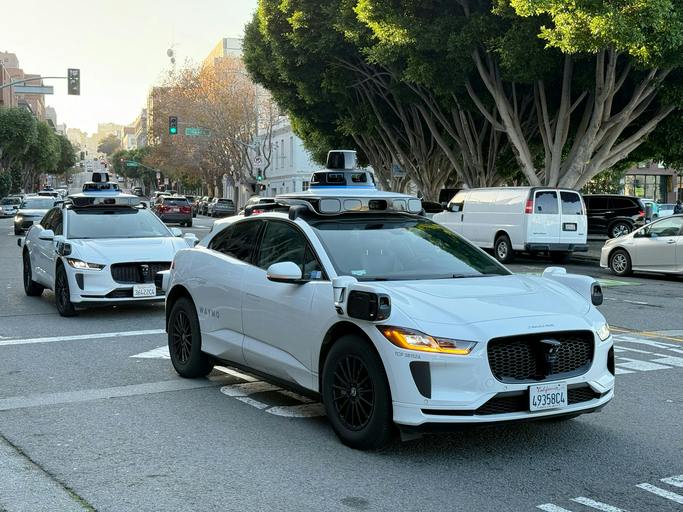
Philadelphia has a real chance to become a major self-driving car market, but its narrow streets, aggressive driving culture, and skeptical City Council make that outcome far from guaranteed. Waymo has been testing autonomous vehicles on Philadelphia streets since August 2025, and the city sits at an early, unsettled stage that could go a few different directions over the next year or two.
Kwartler Manus was founded by trial attorneys David Kwartler and Jason Manus, who built the firm into one of the region's most results-driven personal injury practices from its Philadelphia office. With more than 250 jury trials and 2,500 cases handled across Pennsylvania and New Jersey, our attorneys represent people injured by every kind of vehicle on Pennsylvania roads, so we're tracking how this technology and the law around it develop in the city we call home.
Where Philadelphia Stands Right Now
Testing is underway, but commercial service isn't. Here's what's confirmed as of this writing:
- Waymo has operated test vehicles in Philadelphia since August 2025, with a trained safety specialist behind the wheel
- The company hasn't announced a commercial launch date
- Philadelphia's two marquee 2026 events, the FIFA World Cup and the MLB All-Star Game on July 14, have both already passed without a commercial Waymo launch, and the company was still testing with a safety specialist onboard as of early August 2026, according to The Philadelphia Inquirer
- Waymo is still working through regulatory steps with PennDOT and the Philadelphia Parking Authority, according to FOX 29 Philadelphia
- City Council members have publicly pushed back, questioning both safety and job displacement, according to The Philadelphia Inquirer
Keep in mind: none of that guarantees a launch, and none of it rules one out either.
Why Philadelphia Is an Attractive AV Market
Density works in Waymo's favor. Philadelphia packs roughly 1.57 million residents into about 134 square miles, according to the U.S. Census Bureau, with a large share relying on rideshare and transit rather than personal vehicles. That's the same profile that has made dense urban cores attractive to autonomous vehicle companies elsewhere.
Two major 2026 events already tested that appeal. The FIFA World Cup and the MLB All-Star Game each drew large volumes of visitors who needed rides around a city many of them didn't know well, though Waymo didn't launch commercial service in time for either one. The visitor surge still previewed the kind of demand a fully operational service could serve during future events.
Pennsylvania's regulatory framework already accommodates that kind of expansion. Act 130 allows a certified operator to run automated vehicles statewide without requiring new city-by-city legislation, which is part of why Waymo could scale into Philadelphia without waiting on a fresh state law.
What Pennsylvania Law Actually Allows
Pennsylvania's 2022 law, Act 130, governs highly automated vehicles statewide, starting with certification rather than a patchwork of local rules. A company must obtain a certificate of compliance from PennDOT before operating driverless vehicles.
To get one, an applicant submits, according to PennDOT's official Act 130 guidance:
- Contact information for the certificate-holding entity
- An insurance plan
- A safety management plan
Certificate holders must notify a municipality at least 10 days before operating within its boundaries, but that notice isn't approval. PennDOT functions as the sole regulator of automated vehicle operation on public roads, while the Pennsylvania Public Utility Commission may separately oversee any commercial ride-hailing service the company eventually launches.
That structure is exactly why Philadelphia's City Council has so little direct authority here, a point city officials have raised publicly, per WHYY.
How Philadelphia's Driving Conditions Complicate the Situation
Philadelphia's streets weren't built for this. Much of Center City and the surrounding neighborhoods predate the automobile entirely, which means narrow lanes, irregular intersections, and cobblestone stretches in areas like Old City that don't resemble the wide, gridded roads where Waymo first scaled its service.
Several other factors compound that difficulty:
- Persistent potholes and street damage, serious enough that PennDOT runs repeated repair campaigns on Philadelphia-area highways, and the city maintains an ongoing pothole and street-damage reporting system
- Winter weather severe enough that the city's Office of Emergency Management routinely issues snow emergency and winter storm guidance affecting road conditions for days at a time
- Traffic risk concentrated by location: the city's own Vision Zero data shows 80% of traffic deaths and serious injuries occur on just 12% of Philadelphia's streets
- Heavy pedestrian activity, double-parked delivery vehicles, and dense SEPTA bus and trolley routes running through those same high-risk corridors
Together, these conditions demand more from an autonomous driving system than the wide, predictable grids where Waymo first proved out its technology.
The Safety Debate
Independent research generally favors Waymo's safety record, though the results aren't uniform across its operations.
A study published by the Insurance Institute for Highway Safety found a 68% lower crash rate per vehicle mile traveled compared to human drivers across San Francisco, Phoenix, Los Angeles, and Austin combined, with results varying by market:
- Phoenix: 76% lower crash rate
- Los Angeles: 71% lower crash rate
- San Francisco: 35% lower crash rate
- Austin: a slight increase, on a small sample size
That data doesn't settle the debate in Philadelphia. Specific concerns raised by officials and regulators include:
- Philadelphia City Council members citing Waymo incidents in other states, including collisions involving emergency vehicles, according to FOX 29 Philadelphia
- An open National Highway Traffic Safety Administration investigation into a Waymo crash near a school
- A CNN investigation finding that Waymo vehicles have run red lights and driven into closed or flooded roads in other markets
Whether the technology performs as well on Philadelphia's older, denser street network as it has in newer Sunbelt cities remains an open question that testing is specifically meant to answer.
How Philadelphia Compares to Other Markets
Waymo built its earliest fully driverless service in cities like Phoenix and Austin, where wide streets, predictable grids, and mild weather made the engineering problem more manageable. Philadelphia looks different on every one of those measures: older infrastructure, tighter lanes, and four full seasons of weather that can change road conditions overnight.
Pennsylvania isn't new to this conversation, though. Pittsburgh hosted some of the country's earliest self-driving vehicle testing when Uber's Advanced Technologies Group partnered with Carnegie Mellon University researchers there starting in 2016. That history gives the state a longer regulatory memory than many others now facing these same questions for the first time.
What to Watch Over the Next 12–18 Months
- Whether Waymo and PennDOT finalize the approvals needed for commercial, fully driverless service
- Whether City Council succeeds in gaining any formal role, given its currently limited authority under state law
- Whether Waymo announces a commercial launch date now that the summer 2026 World Cup and MLB All-Star Game have passed without one
- How additional safety incidents or regulatory findings, in Philadelphia or elsewhere, shape public and political opinion
Track This Story With KM Injury Lawyers
As autonomous vehicles become part of daily traffic on Philadelphia streets, Kwartler Manus is already building the technology-driven processes these claims require, from requesting sensor and telemetry data to automatically tracking every case deadline. We handle personal injury claims on a contingency-fee basis, so you owe nothing unless we win.
If you've been injured in a crash involving any vehicle in Philadelphia, including a Waymo, call Kwartler Manus at (267) 457-5570 for a free case review.
FAQs
Who is liable if a self-driving car causes a crash in Pennsylvania?
Under Act 130, the certificate-holding company is generally treated as "the driver" for compliance purposes, though liability can also extend to another driver, a vehicle manufacturer, or a government entity, depending on the facts. See our companion blog, "Waymo Testing in Pennsylvania: Who Would Be Liable in an Accident?" for a full breakdown (link once published).
Are self-driving cars safer than human drivers?
The evidence leans in that direction overall, but isn't uniform. A study from the Insurance Institute for Highway Safety found significantly lower crash rates in most cities studied, with one exception where the rate was slightly higher on a small sample. Results in a new market like Philadelphia haven't been established yet.
How do Philadelphia's streets affect self-driving performance?
Philadelphia's narrow, irregular, and often poorly maintained streets present a more difficult driving environment than the wide grid layouts where Waymo first scaled, and the city's own Vision Zero data show that traffic risk is concentrated on a small share of streets with heavy pedestrian and transit activity.
Can Philadelphia City Council ban self-driving cars?
No. Pennsylvania's Act 130 makes PennDOT the sole regulator of automated vehicle operation on public roads statewide, which leaves City Council without direct authority to ban the vehicles outright, a limitation city officials have acknowledged publicly, per WHYY.
Sources
- PennDOT — Act 130 Q&A
- U.S. Census Bureau — Philadelphia City QuickFacts
- City of Philadelphia — Report a Pothole or Street Damage
- City of Philadelphia — Winter Storm Response Update
- City of Philadelphia — Philly Stat 360 and Vision Zero Dashboard
- Insurance Institute for Highway Safety — Waymo Crash Rate Study
- CNBC — NHTSA Investigates Waymo Crash Near School
- WHYY — Philadelphia Officials Question City's Lack of Power Over Driverless Cars
- The Philadelphia Inquirer — Activists and City Council Want Waymo Stopped
- FOX 29 Philadelphia — Waymo Driverless Taxis Could Launch in Philly
Disclaimer: This blog is for informational purposes only and does not constitute legal advice. The self-driving car landscape in Pennsylvania is changing quickly, and the application of liability or regulation to any specific incident depends on the facts involved. Talk to an attorney about your own situation before relying on anything here.