
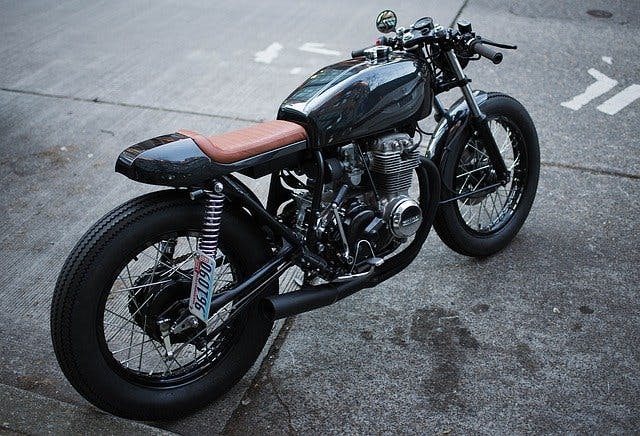
While some personal injury cases are more straightforward than others, if the facts are uncertain or the situation is unclear, that accident case becomes very challenging. When it comes to motorcycle accidents, claims are often complex because riders often have a reputation for recklessness. In Philadelphia, motorcycle accident lawyers are aware of the obstacles victims face in the negotiation process.
Causes of Motorcycle Accidents
The common causes of motorcycle accidents are:
- Failing to yield when making a left-hand turn
- Distracted driving
- Reckless driving
- Less ability to brake on a motorcycle
- Motorcyclists have less protection
- Motorcycles are difficult to control
We see that many motorcycle accidents occur when another driver makes a left-hand turn without yielding to oncoming traffic. The vehicle operator turns into the intersection and strikes the motorcycle traveling through at the same time. This type of accident often occurs when a driver is trying to pass or overtake another vehicle. Accidents are essentially inevitable.
Distracted Driving is Deadly
Distracted driving occurs more often than it should, not only among motorcycle riders but also among other drivers. More accidents nowadays are the result of distracted driving or of drivers not paying attention to the road. Texting and eating shift a driver’s focus away from the road when attention should be strictly on the road. As a result, drivers tend to drift between lanes, miss traffic signals, or fail to notice changing traffic conditions. A motorcycle is relatively small compared to other vehicles, so the slightest distraction could cause a driver to not see the rider.
Speeding
Speeding, changing lanes improperly, tailgating, or any other form of reckless conduct increases the likelihood of an accident. For example, tailgating will result in a rear-end collision with another car, and the result is usually some physical damage or minor injuries. If, however, a car rear-ends a motorcycle, the rider sustains far more severe or fatal injuries.
Vehicle Systems
If you think about a car when the brakes are slammed, you expect it to stop quickly. This is a valid assumption because car braking systems are efficient and powerful. With motorcycles, though, it is different. Should a situation arise in which a motorcyclist has to apply the brakes quickly, they will lose control of their bike.
There are plenty of safety features you might notice in cars or trucks. These vehicles offer drivers and passengers safety devices to mitigate injuries in the event of an accident. Seat belts and airbags will take the brunt of the impact, but they serve a purpose: saving lives. The vehicle's overall construction is a protective frame. Compared to a motorcycle, which offers none of the above-mentioned safety features, there is little to protect a rider from other vehicles and road conditions.
Operating the Motorcycle
It is a deceiving notion that people tend to believe that motorcycles respond quickly to a rider’s desires. This couldn’t be farther from the truth. In reality, motorcycles are not easy to steer and require constant balance. Two wheels do not offer the same stability as four wheels. Meanwhile, poor road conditions, which typically don’t bother other drivers, can be serious hazards for motorcyclists.
Contact a Personal Injury Attorney
If you or someone you know has been injured in a motorcycle accident, you need to prove liability. In order for a victim to be awarded compensation for damages, the injured rider must be able to prove the other party was liable for the accident. Motorcycle accident attorneys are trained professionals who work with other experts to investigate the accident. The main objective is to identify who is responsible. For quality service and representation, consult a motorcycle accident attorney now. Call Kwarlter Manus at 267-457-5570 to schedule a consultation today.