
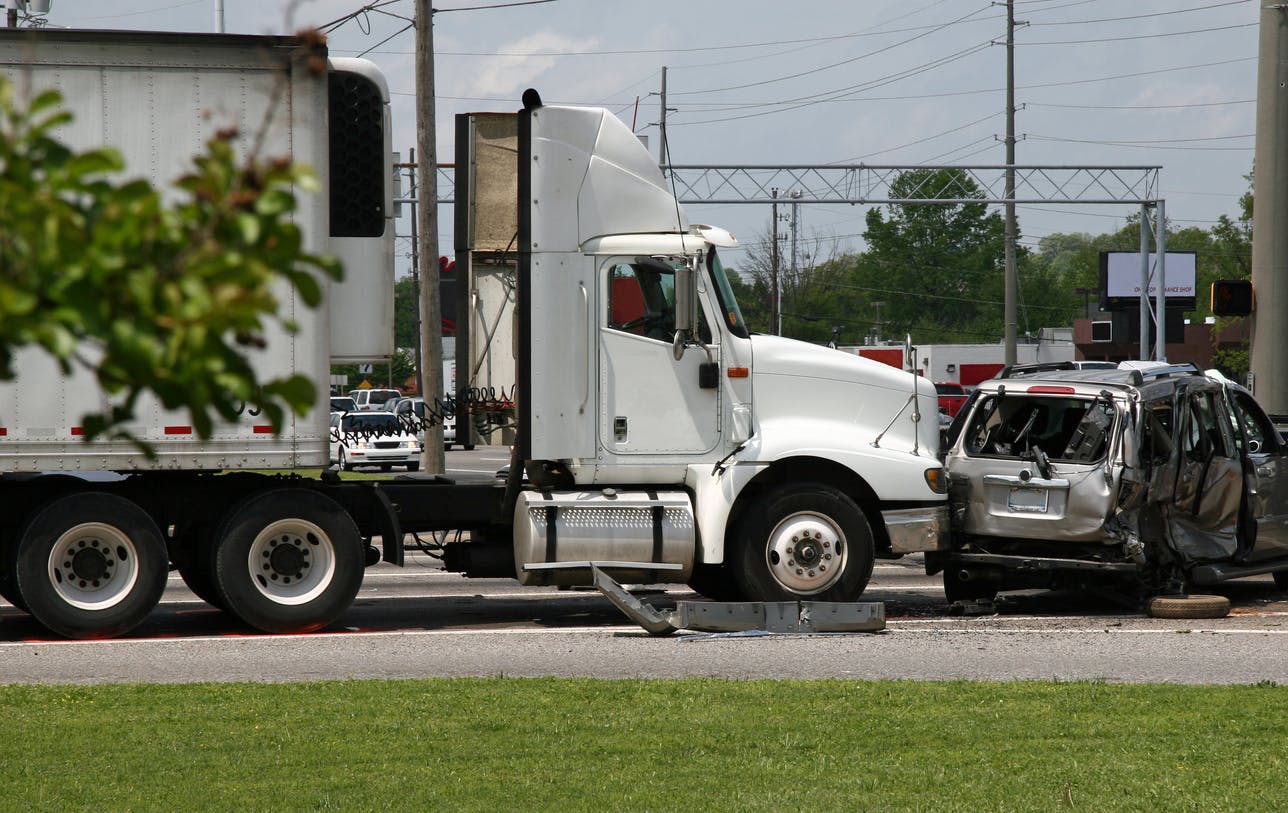
Under 42 Pa. C.S. § 5524, Pennsylvanians seriously hurt in collisions involving commercial trucks have two years from the date of the accident to file a personal injury lawsuit, but the clock on critical evidence starts the moment the accident happens. Fortunately, federal regulations under 49 C.F.R. Parts 382–395 impose strict obligations on commercial carriers, and violations of those rules are among the most powerful tools available to injured victims.
At Kwartler Manus Injury Law, we have extensive experience helping members of our community navigate the claims process. Our founding partners, David E. Kwartler and Jason I. Manus, have built a strong record of success handling complex personal injury cases and advocating for injured clients throughout Pennsylvania and New Jersey. Our team includes former insurance defense attorneys and former prosecutors who understand how the system operates and use that insight to protect the interests of those who have been harmed.
This guide walks you through the legal terms that will define your claim, the filing process from crash to resolution, how attorneys and insurers interact, the deadlines you cannot afford to miss, and the questions we hear most from people in your situation.
Key Legal Terms and Documents
- Negligence: The foundation of most truck accident claims. To win, you must prove the defendant owed you a duty of care, breached it, caused your injuries, and that you suffered real damages. Pennsylvania's modified comparative negligence rule under 42 Pa. C.S. § 7102 allows you to recover as long as you were less than 51% at fault.
- FMCSA Regulations: The Federal Motor Carrier Safety Administration sets mandatory safety standards for commercial trucking. Violations of those standards constitute evidence of negligence.
- Hours of Service (HOS) Records: Federal law under 49 C.F.R. Part 395 limits commercial drivers to 11 hours of driving after 10 consecutive hours off duty. HOS records document whether a driver was in compliance at the time of the crash.
- Electronic Logging Device (ELD): A federally mandated device that automatically records driving time and HOS data. ELD records are among the first pieces of evidence we move to preserve because they are among the most persuasive at trial.
- Black Box/Event Data Recorder (EDR): An onboard computer capturing pre-crash speed, braking, steering, and engine data. This data can be overwritten quickly, making immediate legal action critical.
- Driver Qualification File (DQF): Federal regulations require carriers to maintain a file for every driver that includes employment history, medical certifications, training, and drug and alcohol test results. These files can show that a carrier knew a driver was dangerous before putting them on the road.
- Chain of Custody: The documented record of how evidence was collected, stored, and handled. A broken chain can render evidence inadmissible.
- Spoliation of Evidence: The destruction or alteration of evidence after a duty to preserve it arises. Pennsylvania courts can sanction offending parties, including instructing juries to draw an adverse inference from missing evidence. Our litigation hold letters are designed to prevent it and create a record if it happens anyway.
- Pennsylvania MVFRL: Pennsylvania's Motor Vehicle Financial Responsibility Law, 75 Pa. C.S. § 1701 et seq. governs auto insurance in the Commonwealth. Commercial truck claims are not subject to the limited/full tort election — they proceed under general negligence law.
- FMCSA Minimum Insurance Requirements: Under 49 C.F.R. Part 387, interstate carriers must carry at least $750,000 in liability coverage up to $5 million for hazardous materials. Far higher floors than passenger vehicle minimums, with correspondingly larger potential recoveries.
- Respondeat Superior: A doctrine holding employers liable for employee negligence committed within the scope of employment. The carrier, not just the driver, can be on the hook for the crash.
- Wrongful Death and Survival Actions: When a truck accident results in death, Pennsylvania law provides two claims. A wrongful death action compensates the surviving family for their losses. A survival action, brought by the estate, recovers what the victim could have claimed had they lived, including pain and suffering.
Critical Deadlines You Cannot Miss
| Deadline | Rule |
| Statute of limitations — personal injury | 2 years from the date of the accident (42 Pa. C.S. § 5524) |
| Statute of limitations — wrongful death | 2 years from date of death (42 Pa. C.S. § 5524) |
| Notice to government entities | If a government vehicle or road defect is involved, notice may be required within 6 months under 42 Pa. C.S. § 5522 |
| ELD data preservation | FMCSA requires carriers to retain for 6 months (49 C.F.R. § 395.8) but litigation holds extend this |
| Post-accident drug/alcohol testing | Carrier must test the driver within 8 hours (alcohol) and 32 hours (drugs) under 49 C.F.R. § 382.303 |
| UIM/UM insurance notice | Policy-specific — often 30-60 days, failure to notify can void coverage |
How to File a Truck Accident Claim in Pennsylvania, Step-by-Step
Step 1: Ensure Safety and Call 911
Move out of traffic if possible, then:
- Call 911 immediately to create a police report, which is a critical piece of evidence
- The report documents the scene, identifies witnesses, and creates an official record of the crash
- Do not leave without getting the report number
Step 2: Seek Medical Attention Immediately
Even if you feel fine, go to the ER or an urgent care center right away:
- Many serious injuries—traumatic brain injuries, internal bleeding, spinal damage—don't present symptoms immediately
- Delayed treatment gives insurers grounds to argue your injuries weren't caused by the crash
- Document ambulance transport, ER visits, imaging results, prescriptions, and all follow-up care
Step 3: Preserve the Scene and Gather Evidence
If you are physically able to do so safely:
- Photograph the scene, vehicle damage, skid marks, road conditions, traffic signs, and debris
- Photograph your injuries
- Get the truck driver's name, CDL number, trucking company name, DOT number, and insurance information
- Identify and photograph the truck's license plate and any USDOT markings on the cab
- Get names and contact information for all witnesses
| Evidence Type | Source | Preservation Window |
| Black box / EDR data | Truck's onboard computer | Days to weeks — can be overwritten |
| Electronic logging device (ELD) records | Carrier / FMCSA portal | 6 months minimum under federal law |
| Dash cam footage | Truck or nearby vehicles | Often overwritten within 24-72 hours |
| Police/crash report | PA State Policy or local PD | Days to weeks |
| Driver qualification file | Carrier (via subpoena) | Must be retained under FMCSA rules |
| Drug & alcohol test results | Carrier (post-accident testing required) | Immediate post-crash |
| Vehicle maintenance records | Carrier/repair shops | Ongoing duty to preserve after notice |
| Cargo manifests/bill of lading | Shipper/carrier | Document immediately |
| Cell phone records | Carrier of the driver | Subpoena required |
| Surveillance/traffic camera footage | DOT, municipalities, businesses | Often overwritten within 24-72 hours |
| Witness statements | At scene/follow-up | As soon as possible |
| Medical records & bills | Treating providers | Ongoing |
Step 4: Do Not Speak to the Trucking Company's Insurance Adjuster
The trucking company's insurer will call fast, so keep the following in mind:
- Anything you say will be used against you
- Their job is to minimize your payout, or eliminate it entirely
- Do not give a recorded statement
- Do not accept any settlement offer before your injuries are fully understood
- Call an attorney first
Step 5: Contact Kwartler Manus to Open an Investigation
Once we’re entrusted with your case, our team moves fast:
- We issue litigation hold letters to the trucking company and its insurer within hours
- This document compels them to preserve the black box data, ELD records, driver logs, maintenance records, and surveillance footage before they disappear
- We also retain accident reconstruction experts, subpoena carrier records, and analyze FMCSA compliance data
| Insurer Tactic | How We Counter It |
| Contacting victims immediately after the crash to obtain recorded statements before they've spoken to an attorney | We intercept all insurer communications the moment we are retained |
| Offering a quick, lowball settlement before the full extent of injuries is known | We document the complete scope of your injuries and damages before any settlement is discussed |
| Arguing partial fault to reduce or eliminate your recovery under Pennsylvania's comparative negligence rules | We investigate liability thoroughly and build the evidence needed to counter any fault argument |
| Disputing causation — claiming your injuries existed before the crash | We work with your treating providers and retained experts to establish a clear causal link between the collision and your injuries |
| Characterizing the driver as an independent contractor to shield the carrier from liability | We use carrier records, employment contracts, and FMCSA leasing regulations to pierce that defense |
Step 6: File Insurance Claims
Depending on the specifics of the crash, claims may be filed against:
- The truck driver's liability insurance
- The trucking company's commercial policy
- Your own underinsured/uninsured motorist (UIM) coverage
- A cargo company's liability policy
- A maintenance contractor's policy
Step 7: Demand Package and Negotiation
Once your medical treatment has stabilized and damages can be fully quantified, we prepare a comprehensive demand package, including:
- All medical records
- Bills
- Lost wage documentation
- Expert reports
- Liability evidence
If they don't respond appropriately, we file suit. It’s as simple as that.
Step 8: Litigation (If Necessary) and Resolution (Verdict or Settlement)
If negotiations stall or the insurer refuses to pay fairly, we file suit and press forward:
- We file in the county where the accident occurred, or in a federal court where jurisdiction applies
- Discovery proceeds through depositions, interrogatories, expert reports, and document production
- Cases can settle at any point in the litigation process, but we never push a resolution that doesn't fully compensate you
- If the offer isn't right, we try the case
We prepare every case for trial from day one; that preparation is what creates fair outcomes before a jury is ever seated.
Procedural Timeline
| Phase | Typical Timeframe |
| Accident occurs | Day 0 |
| Emergency medical treatment | Day 0-3 |
| Retain attorney/issue litigation hold letter | Day 1-7 ( faster is better) |
| Insurance claims opened | Within days of retaining counsel |
| Investigation and evidence gathering | Weeks 1-12 |
| Medical treatment stabilizes (MMI) | Varies — weeks to months |
| Demand package submitted | After MMI is reached |
| Insurance negotiation | 30-120 days post-demand |
| Lawsuit filed (if no acceptable settlement) | Before the statute of limitations expires |
| Discovery | 6-18 months post-filing |
| Trial | 1-3+ years post-filing |
Frequently Asked Questions
What if I was partially at fault for the truck accident?
Pennsylvania uses a modified comparative negligence system under 42 Pa. C.S. § 7102. You can still recover damages as long as you are less than 51% at fault. Your percentage of fault reduces your recovery, so if you are found 20% at fault and your damages are $500,000, you recover $400,000. If you are 51% or more at fault, you recover nothing.
How is a truck accident claim different from a car accident claim?
- Higher insurance minimums: Federal law requires interstate carriers to carry at least $750,000 in liability coverage, far above the $15,000 minimum for passenger vehicles in Pennsylvania. Some carriers carry policies of $5 million or more.
- Federal regulations apply: Commercial truck drivers and carriers must comply with FMCSA regulations governing hours of service, vehicle inspections, drug and alcohol testing, and cargo securement. Violations create powerful evidence of negligence.
- More potentially liable parties: Beyond the driver, you may have claims against the trucking company, the cargo loader, a maintenance contractor, a vehicle manufacturer, or a broker.
- More complex evidence: ELD records, black box data, driver qualification files, and carrier safety histories must be obtained quickly and preserved carefully.
- No limited/full tort election: The limited/full tort insurance election that affects passenger car claims in Pennsylvania does not apply to truck accident cases. You pursue your claim under general negligence law.
How much does it cost to hire Kwartler Manus?
Nothing upfront. We work on a contingency fee basis, meaning we don't get paid unless you win.
We’re Ready to Take On Your Truck Accident Case
Filing a truck accident claim in Pennsylvania is not like filing a claim after a fender-bender. The evidence is more complex. Kwartler Manus Injury Law has spent years building a firm designed for exactly this fight. Our founding partners, David E. Kwartler and Jason I. Manus, have hundreds of jury trials between them and a track record of results that speaks for itself. Our team includes former insurance defense attorneys who know how the other side thinks, and former prosecutors who know how to take a case apart.
If you or someone you love has been injured in a truck accident in Pennsylvania, you need someone in your corner. Contact Kwartler Manus today for a free consultation. Our attorneys are available 24/7.
Disclaimer: This content is for informational purposes only and does not constitute legal advice. Reading this article does not create an attorney-client relationship. Past results do not guarantee future outcomes. If you have been injured, consult a licensed attorney regarding your specific legal situation.